5+ Aesthetic Candid Couple AI Photo Prompts 2026: No More Fake Looking AI Images
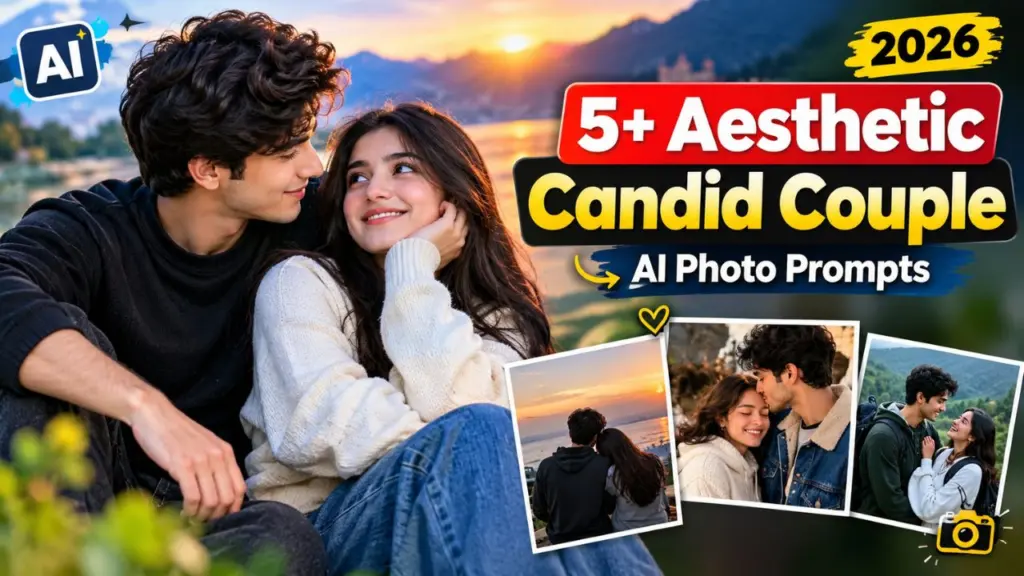
5+ Aesthetic Candid Couple AI Photo Prompts 2026: You have seen them everywhere: two perfectly symmetrical people, glowing plastic skin, identical teeth, a blurry dreamy background, and eyes staring straight at the camera like a stock photo. The image is technically impressive, but your brain instantly says, “This is AI.”
The reason is simple. Most people write prompts like this:
beautiful couple, romantic, 4k, ultra realistic, cinematic
Words like “ultra realistic”, “4k” and “perfect” actually push the model toward over-polished, retouched output. Real candid photos are the opposite. They contain imperfections: slightly messy hair, uneven lighting, motion blur, off-center framing, and people looking at each other instead of the lens.
This guide gives you 7 ready-to-use aesthetic candid couple prompts plus the exact framework behind them, so you can adapt them for any AI tool.
What Makes a Photo “Candid” (And How to Tell the AI)
A candid photo feels like a moment someone happened to catch, not a moment someone arranged. To recreate that, your prompt needs to describe five things:
- A mid-action moment, such as laughing, walking, adjusting a jacket, or sharing a drink.
- No eye contact with the camera, since the couple looks at each other or at something off-frame.
- A real camera and lens, for example a 35mm lens, a disposable camera, or a phone shot.
- Natural, imperfect light, such as golden hour, window light, or streetlamp glow.
- Texture and flaws, including film grain, flyaway hair, visible skin pores, and slight motion blur.
When you describe all five, the model stops producing a “poster” and starts producing a “memory.”
The Realism Formula: A Simple Prompt Structure
Use this structure every time:
[Subject + relationship] + [candid action] + [location] + [lighting] + [camera and lens] + [texture and imperfections] + [mood] + [negative cues]
Example breakdown:
- Subject: a young Indian couple in their mid-20s
- Action: laughing while sharing one umbrella
- Location: a quiet street after rain
- Lighting: soft overcast light with warm shop glow
- Camera: shot on 35mm film, shallow depth of field
- Texture: film grain, natural skin texture, flyaway hair
- Mood: warm, nostalgic, unposed
- Negative cues: no airbrushed skin, no looking at camera, no studio lighting
Keep this skeleton handy. Every prompt below follows it.
Prompt 1: Golden Hour Rooftop Laugh
Vibe: warm, carefree, summer evening
A candid photo of a young couple laughing on a rooftop at golden hour, the guy whispering something and the girl covering her smile with her hand, both looking at each other and not at the camera. Her hair is slightly messy from the wind, his shirt is wrinkled. Warm sunset backlight with soft lens flare, shot on a 35mm lens, shallow depth of field, subtle film grain, natural skin texture with visible pores, slight motion blur on her hair. Unposed, intimate, nostalgic mood. No airbrushed skin, no studio lighting, no stock-photo smile.Why it works: the whisper and the hand over the smile create a believable micro-moment, and the wind-blown hair breaks the “perfect AI hair” pattern.
Prompt 2: Rainy Street Shared Umbrella
Vibe: cinematic, moody, romantic
A candid street photograph of a couple walking close under one clear umbrella on a wet city street at dusk. She is slightly leaning on his arm while he looks down at her laughing. Reflections of neon shop signs on the puddles, small raindrops on their jackets, slightly damp hair. Shot on a 35mm film camera with Kodak Portra 400 color tones, soft grain, shallow focus, handheld framing slightly off-center. Natural imperfections, real skin texture, no looking at camera, no over-sharpened details.Pro tip: adding “slightly damp hair” and “raindrops on their jackets” gives the model small realistic details to anchor on.
Prompt 3: Cozy Cafe Window Seat
Vibe: quiet, soft, everyday romance
A candid photo of a couple sitting at a cafe window table, she is stirring her coffee and smiling at something he just said, he is resting his chin on his hand watching her. Soft diffused daylight from the window, a few crumbs and a half-eaten dessert on the table, steam rising from the cups. Shot on a 50mm lens at f/1.8, slightly warm tones, light film grain, natural skin with small blemishes, casual clothes with slight wrinkles. Unposed, documentary style. No studio lighting, no perfect symmetry, no direct eye contact with camera.Why it works: props like crumbs and steam add “life” to the scene, which AI tends to skip when left alone.
Prompt 4: Disposable Camera Night Out
Vibe: nostalgic, flash photography, Gen Z
A candid disposable camera photo of a couple at a night street market, direct on-camera flash, the girl mid-laugh with her eyes half closed, the guy holding two street-food cups and looking at her. Harsh flash falloff, slightly overexposed skin highlights, dark background with warm string lights, noticeable grain, slight blur, tilted framing, red-eye avoided. Looks like a photo from a friend's film roll, spontaneous and imperfect, no beauty retouching.Why it works: flash photography naturally hides the “AI glow.” Harsh falloff, grain and tilted framing make the image feel like a real scan from a film roll.
Prompt 5: Beach Walk at Sunrise
Vibe: airy, peaceful, soft pastel
A candid wide shot of a couple walking barefoot along the shoreline at sunrise, holding hands, his jeans rolled up, her sandals in her other hand. She is looking down at the waves while he looks at her and smiles. Soft pastel sky, long shadows, wet sand reflections, gentle sea breeze moving their clothes. Shot on a 28mm lens, natural light, slight haze, fine film grain, small figures in a larger landscape, imperfect framing. No posed pictures, no perfect skin, no looking at camera.Pro tip: wide shots hide facial flaws that AI struggles with, which is why they often look more believable than close-ups.
Prompt 6: Home Kitchen Morning Moment
Vibe: warm, domestic, intimate
A candid photo of a couple in a small home kitchen on a lazy morning, she is sitting on the counter in an oversized shirt eating cereal, he is making tea and laughing at something on her phone. Soft window light, slightly messy kitchen with dishes and a fruit bowl, steam from the kettle, sleepy hair and no makeup. Shot on a phone camera look, natural color, slight noise in the shadows, casual framing as if captured by a family member. Real skin texture, no filters, no cinematic color grading.Why it works: “no makeup”, “sleepy hair” and a messy kitchen are signals of real life that most AI prompts never include.
Prompt 7: Festival Night in Traditional Outfits
Vibe: colorful, festive, culturally rich (great for Indian audiences)
A candid photo of a couple at a festival evening, she wears a simple cotton saree with a small flower in her hair, he wears a kurta with slightly rolled sleeves. They are standing near diya lights, he is gently fixing her dupatta while she laughs and looks away. Warm lantern glow, blurred crowd in the background, soft bokeh lights, shot on an 85mm lens, natural skin tone, fine grain, slightly uneven lighting, a bit of motion blur from people passing behind. Documentary wedding-guest style, unposed, no heavy makeup, no plastic skin, no looking at camera.Pro tip: specifying simple, realistic outfits (cotton, not “ultra ornate”) reduces the over-decorated look AI tends to create.
10 Realism Keywords That Instantly Reduce the “AI Look”
Add two or three of these to any prompt:
- natural skin texture with visible pores
- flyaway hair and slightly messy hairstyle
- film grain or ISO noise
- slight motion blur
- off-center, handheld framing
- uneven natural lighting
- shot on 35mm film or disposable camera
- mid-laugh, eyes half closed
- wrinkled clothing
- documentary style, unposed
Words to Avoid in Your Prompts
Some popular words quietly sabotage realism:
- “Ultra realistic”, “hyper realistic”, “8K” push the model toward over-sharpened, CGI-like results.
- “Perfect”, “flawless”, “beautiful” invite airbrushed skin.
- “Cinematic” used alone often adds heavy teal-and-orange grading.
- “Studio lighting” removes the natural feel.
- “Looking at the camera” turns a candid into a portrait.
Replace them with specific, physical descriptions of what a real camera would capture.
Best Negative Prompt Add-Ons
If your tool supports negative prompts (Stable Diffusion, Leonardo, and similar), use this:
airbrushed skin, plastic skin, perfect symmetry, studio lighting, over-sharpened, looking at camera, posed, stock photo, watermark, extra fingers, deformed hands, glossy eyes, HDR, oversaturatedIf your tool does not support negative prompts (like ChatGPT or Gemini), write the same ideas as positive instructions at the end, for example: “natural unretouched skin, unposed, no studio lighting.”
How to Fix Hands, Eyes and Faces
Hands and eyes are the biggest giveaways of AI images. Try these fixes:
- Hide or simplify hands. Put them in pockets, around a coffee cup, or holding another person’s arm.
- Avoid extreme close-ups unless your tool handles faces well.
- Use medium or wide shots, which are more forgiving.
- Ask for “eyes looking at each other”, which keeps gaze direction natural.
- Generate multiple versions and pick the best, since even great prompts produce occasional errors.
Which AI Tool Is Best for Candid Couple Photos in 2026?
Different tools have different strengths, and results vary by version and settings:
- Midjourney: strong aesthetics and film looks. Try adding
--style rawfor less over-polished output. - ChatGPT image generation: good at following detailed scene descriptions, so long, descriptive prompts work well.
- Gemini image generation: handles natural, everyday scenes well and is easy to use for beginners.
- Stable Diffusion and Flux-based tools: the most control, with negative prompts and realism models available.
Test the same prompt across two tools and keep the one that gives the most natural skin and lighting.
Editing Tips to Make AI Photos Look Even More Real
A small amount of post-processing can remove the last traces of “AI”:
- Add subtle grain in Lightroom, Snapseed or VSCO.
- Lower clarity and sharpening, since AI images are often too crisp.
- Reduce saturation slightly to avoid neon-looking colors.
- Add a tiny vignette and mild warm tones for a film feel.
- Crop unevenly, because real photos are rarely perfectly framed.
- Remove extra glow around faces and highlights.
Avoid overediting, as heavy filters can bring back the artificial look.
Ethical Use: Use AI Couple Photos Responsibly
Realistic AI images are powerful, so use them thoughtfully:
- Do not use real people’s faces without their consent.
- Label AI-generated images when you post them publicly, especially if they could be mistaken for real photos.
- Never create misleading or harmful content, such as fake relationships or deceptive profiles.
- Check each platform’s policy on AI content before posting.
Used honestly, these prompts are great for creative projects, mood boards, blog visuals, story ideas and social content.
Frequently Asked Questions
1. How do I make AI couple photos look real? Describe a candid action, natural lighting, a specific camera or film look, and small imperfections like messy hair and visible skin texture. Avoid words like “perfect” and “ultra realistic.”
2. Why do my AI photos have plastic-looking skin? Prompts with “flawless”, “beautiful” or “4K” encourage heavy smoothing. Add “natural skin texture, visible pores, unretouched” instead.
3. Can I use these prompts in ChatGPT, Gemini and Midjourney? Yes. All prompts are written in plain descriptive English and work across most major image generators, though results will vary by tool.
4. How long should an AI photo prompt be? Between 60 and 120 words is a good range: detailed enough to describe the moment, but not so long that the model ignores parts of it.
5. How do I stop AI from making everyone look at the camera? State clearly that the couple is “looking at each other” or “looking away,” and add “no looking at camera” at the end.
6. How can I make the same couple appear in multiple photos? Keep the same physical description (age, hair, clothing) in every prompt, or use your tool’s reference image or character consistency feature if available.
Final Thoughts
The secret to non-fake AI couple photos in 2026 is not a magic keyword. It is thinking like a photographer: describe the moment, the light, the camera, and the little imperfections that make a memory feel human.
Start with the seven prompts above, swap the location, outfits and mood to match your story, and keep experimenting. Save the versions that feel the most natural, and you will soon build your own personal prompt library.
Quick recap checklist before you hit generate:
- A mid-action, candid moment
- Couple looking at each other, not the lens
- Natural, imperfect lighting
- A named camera, lens or film look
- Skin texture, messy hair, and wrinkled clothes
- No “perfect,” “flawless” or “ultra realistic”
Happy creating!